
How to Create a Warrior Order for a Fantasy World
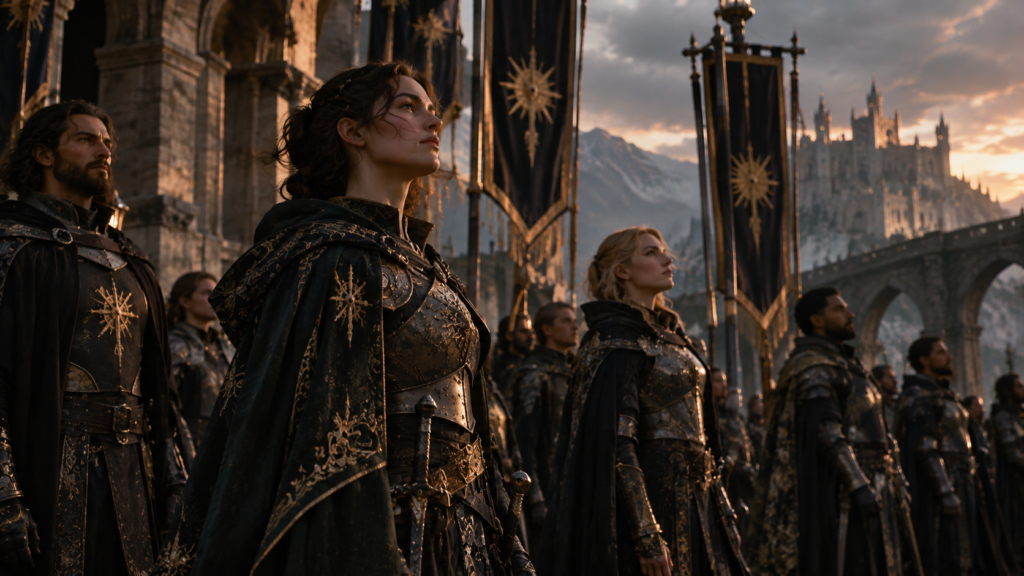
Table of Contents
If you’ve been trying to figure out how to create a warrior order for a fantasy world, you’re tapping into one of the most enduring ideas in the genre. Holy knights, sworn sisterhoods of warriors, monster hunters, oath-bound guardians of a dying king… warrior orders show up everywhere in fantasy, and they’re having a big moment again with Sarah J. Maas kicking off what she’s calling the Valkyrie Cycle in the newest A Court of Thorns and Roses book. Readers love them because a warrior order is more than a group of people with swords. It’s an identity, a family, a code, and very often a source of conflict that can drive an entire plot. So, for today’s post, I’ll be walking you through how to create a warrior order for your fantasy world that feels like it has real history behind it, from the reason it was founded to its vows, ranks, training, rituals, and the cracks that could eventually tear it apart.
I’ve been writing dark fantasy and grimdark for a long time (check out my series, The Fallen Age Saga), and some of my favorite things to build are the institutions that shape characters before the story even begins. A warrior order is one of the best examples of this, because everyone inside it has been molded by its rules. If you’re still figuring out the world your order lives in, grab a free copy of my 10-question world building primer. It’s completely free and it’ll help you think critically about your world before you start adding factions to it.
Your World Building Journey Begins Here…
Get 10 powerful prompts that will spark a living, breathing world and set the stage for the epic details to come.
A Messenger Has Arrived…
They carry your 10-Question World Primer, sealed with my crest. Break the seal (open your inbox) to begin shaping your realm.
What Is a Warrior Order?
A warrior order is an organized group of fighters bound together by a shared purpose, a code of conduct, and usually some form of oath or vow. What separates a warrior order from a regular army is that membership is about identity, not just employment. A soldier serves for a term or a wage. A member of a warrior order belongs to it, often for life.
Warrior orders in fiction tend to draw from a few real-world and mythological inspirations. The military orders of the Middle Ages, like the Knights Templar and the Knights Hospitaller, combined religious vows with martial duty. I recommend checking out some of my posts about history books for recommendations!
Monastic fighting traditions tied combat training to spiritual discipline. And mythology gives us figures like the Valkyries of Norse legend, divine warrior women connected to battle and the fate of the fallen. You don’t need to copy any of these, but knowing where the idea comes from helps you understand what makes an order feel distinct from a mercenary company, a city watch, or a guild.
A good fantasy warrior order usually has:
- A clear purpose that explains why it exists
- A code, creed, or set of vows its members live by
- A way of choosing and initiating new members
- A structure of ranks and authority
- A distinct fighting style, culture, and set of traditions
We’ll go through each of these, plus a few things that will help your order feel truly alive in your story.
Why Warrior Orders Work So Well in Fiction
Before we start building, it’s worth understanding why readers connect with warrior orders so strongly, because that’ll help you decide which parts of yours deserve the most attention.
The first reason is belonging. A warrior order is a ready-made found family. The bonds between people who trained together, bled together, and swore the same oaths are some of the most compelling relationships in fantasy.
The second reason is identity and conflict. A character who belongs to an order has a set of values that were drilled into them. That makes for amazing internal conflict when those values get tested. What happens when a knight sworn to obey is ordered to do something monstrous? What happens when a warrior sworn to celibacy falls in love?
The third reason is structure. Orders come with built-in story arcs. A recruit trying to survive initiation. A veteran climbing the ranks. A disgraced member trying to win back their honor. A loyal soldier who discovers the order’s leadership is rotten. These arcs practically write themselves once the order is well built.
Start With Why the Order Exists
Every warrior order was founded for a reason, and that reason should shape everything about it. This is the first and most important question you need to answer.
Some common purposes for a fantasy warrior order:
- Defending a kingdom, a border, or a sacred place
- Protecting a royal bloodline, a holy relic, or a powerful secret
- Serving a god or enforcing a religion
- Hunting monsters, demons, or rogue magic users
Once you know the purpose, think about the founding itself. Who founded the order, and what was happening in the world at the time? Was it born from a war, a prophecy, a disaster, or a betrayal? Founding stories are fantastic because they give your order a mythology. Members might tell stories about the first commander, keep relics from the founding battle, or celebrate the anniversary of the day the order swore its first oath.
It’s also worth asking whether the order’s original purpose still makes sense today. An order founded to fight a monster that hasn’t been seen in three hundred years is in a very different position than one still fighting a war that never ended. That gap between what the order was created for and what it does now is one of the richest sources of conflict you can give it.
Decide Who the Order Answers To
A warrior order is a group of trained, armed, fiercely loyal people. That makes it powerful, and power always comes with politics. One of the biggest questions you need to answer is who your order actually answers to.
Some orders serve the crown directly and act as the monarch’s personal guard. Some answer to a church or temple and are essentially the military arm of a religion. Some are independent and answer only to their own leadership, which can make rulers very nervous. Some claim to answer to the gods themselves, which makes them nearly impossible to control.
Each of these creates a different relationship with the rest of your world. An order loyal to the crown might be hated by the people it’s used against. A religious order might clash with the throne over whose authority comes first. An independent order might be courted, feared, or targeted by every power in the realm.
Think about where your order gets its money, land, and weapons too. Whoever funds the order has leverage over it, and leverage is where political drama comes from. I talk about how tensions between powers can play out in my post on how to create conflict between fantasy kingdoms beyond war. And if you want to properly map out where your order fits in your world’s power structure, my Beginner’s Guide to Worldbuilding Politics is a 100+ page workbook that walks you through how political power is built and fought over. For something quicker, the Political System Builder Workbook is a great option.
Write the Code They Live By
The code is the heart of a warrior order. It’s what separates an order from a gang with matching armor. Whether it’s called a creed, an oath, a set of vows, or a list of tenets, the code tells members who they’re supposed to be.
When you design your order’s code, think about what it values most. Loyalty? Honor? Obedience? Mercy? Strength? Faith? Then think about what it forbids. Some orders forbid marriage, wealth, or retreat in battle. Some forbid harming the innocent or drawing a blade against a fellow member. Some have strange or very specific taboos that only make sense once you know the order’s history.
Just as important is what happens when someone breaks the code. Is there a trial? Exile? Branding? Death? Can a member be forgiven, or is a broken oath permanent? The harsher the consequences, the more weight every temptation carries in your story.
Here’s a tip that makes a huge difference: give your code at least one rule that’s hard to follow or that contradicts another rule. Real codes are messy. A vow to obey your commander and a vow to protect the innocent will eventually collide, and when they do, your character has to choose. Those are the moments that make readers sit up.
Decide Who Can Join and How
Every order needs new blood, and how it finds its members says a lot about what kind of order it is. Ask yourself who is allowed to join and who isn’t.
Maybe only nobles can become knights. Maybe the order takes orphans and raises them from childhood. Maybe it’s a sisterhood that only admits women. Maybe members are chosen by a god, marked by magic, or born with a particular gift. Maybe anyone can try to join, but almost no one survives the trials.
Then think about initiation. This is one of the most fun parts of building an order, and it’s often where readers first meet it in a story. Initiations can be physical trials, spiritual ordeals, tests of loyalty, or ceremonies steeped in ritual. They might involve fasting, combat, a dangerous journey, a magical binding, or swearing an oath over something sacred. Some orders might keep parts of the initiation secret, even from recruits, until the moment it happens.
Initiation is also a fantastic place to start a story. A character trying to survive their order’s trials gives you instant stakes, a cast of rivals and allies, and a natural way to introduce your world through the eyes of someone learning it for the first time.
Build a Structure of Ranks
An order needs a structure, and that structure creates ambition, rivalry, and authority. You don’t need an incredibly complicated hierarchy, but you do need to know how power flows inside the order.
A simple structure might look something like this:
- Recruits or initiates who are still in training
- Full members who have taken their vows
- Veterans or officers who lead small groups
- Commanders who oversee larger forces or regions
- A grand master, high commander, or council at the top
Think about how people move between ranks. Is it based on skill, seniority, deeds, birth, or politics? Can a commoner rise to the top, or is leadership reserved for certain families? How are leaders chosen when the head of the order dies?
Ranks are also where relationships between members get interesting. A mentor who trains a recruit, a rival competing for the same promotion, a commander who sends people to die… these relationships carry a lot of emotional weight. If mentorship is going to play a big role in your order, check out my post on how to develop a proper mentorship relationship in fantasy.
Give Them a Way to Fight
A warrior order should fight in a way that’s recognizably its own. Readers should be able to picture a member of your order in battle and know exactly who they are.
Start with the basics. What weapons do they favor? What kind of armor do they wear, if any? Do they fight on horseback, on foot, from the shadows, or from the sky? Do they fight as disciplined units or as elite individuals? Their fighting style should connect back to their purpose. An order built to hunt monsters is going to train and arm itself very differently from one built to guard a king in a crowded throne room.
Craft unforgettable character backstories
Grab your free Character Backstory Cheat Sheet to learn more about your characters and organize your narrative
Thank you!
You have successfully joined our subscriber list.
Then think about magic. Does your order use magic in battle? Are its warriors blessed by a god, bonded to creatures, or trained in a secret form of combat magic? Or is the order made up of people who specifically can’t use magic, fighting against those who can? If your order’s magic is a big part of its identity, my Magic System Builder Canva Template can help you lay out how it works and what it costs.
Many orders also carry signature weapons or relics. A blade passed down from the founder, armor forged from a defeated monster, a sacred banner that’s never been allowed to fall. These items make great plot devices. If you want to design them in detail, my Magic Item Creation Workbook walks you through building magical objects with their own history and powers. And for the weapons side of things more broadly, I’ve written a whole post on how to design weapons for a fantasy military.
Add Faith, Ritual, and Tradition
A lot of warrior orders are deeply tied to religion, and even the ones that aren’t usually have rituals that feel almost sacred to their members. This is the part of world building that makes an order feel like a culture rather than just a job.
If your order is religious, think about which god or faith it serves and how that shapes its code, its enemies, and its sense of purpose. A warrior who believes they’re doing a god’s work is going to behave very differently from one who’s just following orders. If you want to build that faith out properly, my Fantasy Religion Builder Workbook walks you through designing a religion from the ground up.
Even without religion, rituals matter. Think about things like:
- How members honor their dead
- Ceremonies for promotions, oaths, or victories
- Symbols, colors, sigils, and battle cries
- Songs, sayings, and stories passed down through generations
Don’t forget about daily life, either. Where does the order live? A fortress, a monastery, a mountain citadel, a traveling camp? What does a normal day look like when they’re not at war? Meals, training, prayer, chores, and downtime all help make the order feel real, and they give you quieter scenes where relationships between characters can grow.
Decide How the World Sees Them
Your order has an identity on the inside, but the outside world has its own opinion. That reputation affects how your characters are treated everywhere they go.
Are they seen as heroes? Protectors of the realm who get free drinks in every tavern? Or are they feared zealots who burn villages in the name of their god? Maybe they’re seen as outdated relics of a war everyone else has forgotten. Maybe the nobility respects them while commoners resent them. Maybe they’re legends in one kingdom and wanted criminals in the next.
The gap between how the order sees itself and how others see it is another great source of tension. A young knight who grew up believing in the order’s glory might be shocked to discover how much the common people hate them. That kind of discovery can drive an entire character arc.
Plant the Seeds of Conflict
This is what turns a well-built order into a story engine. The most memorable warrior orders in fiction are never perfect. They have cracks, and those cracks are where the drama lives.
Think about what could go wrong inside your order. Corruption at the top. A schism between members who interpret the code differently. A forgotten crime from the order’s past that’s about to come to light. A leader who’s using the order for personal power. A purpose that no longer makes sense, leaving members struggling to justify their existence.
You can also think about conflict from the outside. A ruler who wants to disband the order. A rival order competing for the same role. An enemy that the order was founded to fight, finally returning after centuries. Any of these can put your order, and the characters inside it, under enormous pressure.
You don’t need to reveal all of this at once. Often the best approach is to show the order at its most impressive early in the story, and then slowly reveal the rot underneath. That reveal can be devastating for characters who’ve given their lives to it.
Put Real People Inside the Order
An order is only as compelling as the people in it. Once you’ve built the institution, spend time on the characters who live inside it, especially your protagonist.
Think about how your character feels about the order. Do they believe in it completely? Did they join out of desperation? Were they born into it with no choice? Are they starting to doubt it? Their relationship with the order should evolve over the course of your story, and that evolution is often the backbone of their arc.
Warrior orders also pair beautifully with romance. Forbidden love between two members, a sworn guardian falling for the person they protect, a knight torn between their vows and their heart. If your story involves a knight and a royal they’re sworn to serve, my Knight x Princess Story Builder Workbook is designed for exactly that dynamic.
And for building the characters themselves, my Ultimate Character Creation Guide and Workbook is a 150+ page workbook that helps you take each member of your order from a rough concept to someone who feels alive on the page. If your order members are starting to blur together, my post on how to stop writing boring characters is a good place to start too.
Common Mistakes to Avoid
Before we get to the full breakdown, here are a few traps that come up a lot when writers build warrior orders.
The first is giving the order a cool aesthetic and nothing underneath. Matching armor and a dramatic name aren’t enough. If you can’t explain why the order exists and what it believes, readers will feel it.
The second is making the order perfect. An order with no corruption, no internal disagreement, and no flaws is a lot less interesting than one with secrets.
The third is writing a code that’s too simple. If every vow fits neatly together, your characters never have to make hard choices. Let the rules collide.
And the last is forgetting the rest of the world. An order doesn’t exist in a vacuum. It has allies, enemies, funders, and critics, and those relationships are what give it weight.
How to Create a Warrior Order for a Fantasy World
Now that we’ve gone through everything, here’s a step-by-step breakdown of how to create a warrior order for a fantasy world.
Step 1: Decide why the order exists. Define its purpose and founding story, and consider whether that purpose still makes sense in the present.
Step 2: Decide who the order answers to. Figure out whether it serves a crown, a church, itself, or the gods, and who funds it.
Step 3: Write the code. Define what the order values, what it forbids, and what happens when someone breaks their vows, and include at least one rule that’s hard to follow.
Step 4: Decide who can join and how. Set the requirements for membership and design an initiation that tests recruits.
Step 5: Build a structure of ranks. Create a hierarchy and decide how members rise through it and how leaders are chosen.
Step 6: Give them a way to fight. Define their weapons, armor, tactics, magic, and signature relics, all tied back to their purpose.
Step 7: Add faith, ritual, and tradition. Build the beliefs, ceremonies, symbols, and daily life that make the order feel like a culture.
Step 8: Decide how the world sees them. Establish the order’s reputation and how it differs from how members see themselves.
Step 9: Plant the seeds of conflict. Give the order internal cracks and external threats that can drive your plot.
Step 10: Put real people inside it. Build characters whose relationship with the order evolves throughout your story.
Conclusion
Creating a warrior order for a fantasy world is really about building an identity that your characters can live inside, fight for, and maybe eventually turn against. If you know why your order exists, what it believes, how it fights, and where its cracks are, you’ll have a faction that adds history, conflict, and emotional weight to every scene it appears in.
Don’t forget to grab your free copy of my 10-question world building primer if you haven’t already. It’s the perfect first step before you start building the factions of your world.
If you’re ready to build your world properly, pick up my Ultimate Guide to World Building. It’s over 340 pages of in-depth instruction, guided worksheets, and practical tips covering politics, religion, cultures, history, and everything else your warrior order needs to feel like it belongs. And if you’d rather keep all of your world building organized digitally, check out The World Building Fortress, my fantasy worldbuilding Notion template that gives every faction, order, kingdom, and culture in your world its own place to live.
Be sure to join the Writing Frontier, my newsletter, too, so you get my newest posts, guides, and updates on my WIPs first!
Your World Building Journey Begins Here…
Get 10 powerful prompts that will spark a living, breathing world and set the stage for the epic details to come.
A Messenger Has Arrived…
They carry your 10-Question World Primer, sealed with my crest. Break the seal (open your inbox) to begin shaping your realm.
FAQs
A warrior order is an organized group of fighters bound by a shared purpose, a code of conduct, and usually an oath or vow. Unlike a regular army, membership in a warrior order is tied to identity and belonging, often for life.
An army is typically a military force that serves a state, with soldiers who may serve for a set term or wage. A warrior order is defined by its code, traditions, and sense of shared identity, and its members usually take vows that bind them to the order itself.
Medieval military orders like the Knights Templar and Knights Hospitaller, monastic fighting traditions, and mythological figures like the Norse Valkyries are common inspirations. Writers often blend elements from several sources to create something original.
Decide what the order values most, what it forbids, and what happens to members who break their vows. Strong codes often include at least one rule that’s difficult to follow or that can conflict with another rule, which creates meaningful choices for characters.
It depends on the order. Some only accept nobles, some raise orphans from childhood, some are limited to a specific group, and some choose members through magic or divine selection. Most include an initiation, such as physical trials, spiritual ordeals, or oath ceremonies.
It doesn’t have to be, but many are. Religious orders often have a strong sense of purpose and clear enemies, while secular orders may focus more on loyalty to a ruler, a cause, or each other. Even non-religious orders usually have rituals and traditions.
Introduce corruption among leaders, disagreements over how to interpret the code, buried secrets from the order’s past, or a purpose that no longer makes sense. External threats, like rulers who want to disband the order or rival factions, also create pressure.
Yes. Warrior orders pair naturally with tropes like forbidden love between members, a sworn guardian falling for the person they protect, or a knight torn between duty and love. Vows and codes create built-in obstacles for romance.
This post contains affiliate links, which means I earn a small commission at no additional cost to you when you purchase something through one of my links. Thank you for your support!