
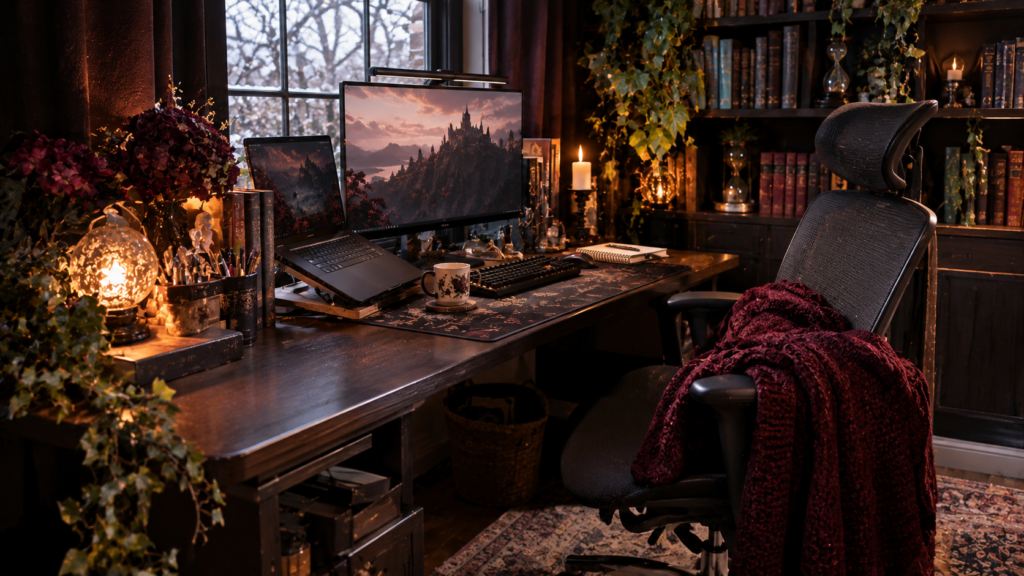
If you’ve been searching for the best ergonomic chairs for writers who sit all day, you already know the feeling of finishing a long drafting session and realizing your back, neck, and shoulders are all mad at you. Writing is one of those things that looks relaxing from the outside, but sitting in one spot for four, six, or even ten hours while you chase a scene is rough on the body. So, for today’s post, I’ll be going over the best ergonomic chairs for writers who spend all day at the desk, what actually matters when you’re picking one, and which chair makes the most sense for your budget and the way you write.
I’ve been writing fantasy and sci-fi for a long time (check out my series, The Fallen Age Saga), and if there’s one thing I’ve learned, it’s that the books that take the most out of you are the ones that keep you in the chair the longest. World building, outlining, drafting, revising, etc… it all happens sitting down. If you’re the type of writer who loses whole afternoons building a world, grab a free copy of my 10-question world building primer. It’s completely free and it’ll help you make those long sessions way more productive from the very first page.
Why Your Chair Matters More Than You Think
Most writers will happily spend money on a new laptop, a fancy keyboard, or a stack of craft books, but the chair ends up being whatever was cheapest at the store. I get it. A chair isn’t exciting. But think about it this way: the chair is the one piece of gear you are physically touching for every single word you write.
Writing is also a very specific kind of sitting. It’s not like gaming, where you’re leaning back with a controller, and it’s not quite like a typical office job, where you’re getting up for meetings and walking to the printer every half hour. Writers tend to sink into a scene and stay there. We lean forward when the plot gets tense, we slump when we’re stuck, and we sit perfectly still for way too long when we enter a flow state.
That’s exactly why a regular desk chair tends to fall apart (sometimes literally) for writers. A good ergonomic chair is built to move with you and support you through all of those positions, rather than just giving you a place to park.
One quick note before we go any further: I’m a writer, not a doctor. If you already deal with back pain, hip pain, or any kind of injury, talk to a doctor or physiotherapist before buying anything. A chair can make long sessions more comfortable, but it isn’t a treatment.
What to Look for in an Ergonomic Chair for Writing
Before getting into the actual picks, it’s important to understand what separates a genuinely good ergonomic chair from one that just has the word “ergonomic” slapped onto the listing. On Amazon especially, almost every chair calls itself ergonomic. That doesn’t mean much on its own.
Here’s what I’d focus on as a writer:
- Adjustable lumbar support that you can move up, down, and ideally in and out
- Seat depth adjustment, so the seat fits the length of your legs
- Adjustable armrests that can get close enough to your keyboard to actually support your arms
- A wide seat height range, especially if you’re on the shorter or taller side
- A recline you can lock, for when you’re reading back over a chapter
Seat depth is the one that people forget about the most. If the seat is too deep for your legs, you’ll end up perching on the front edge and losing your back support entirely. If it’s too shallow, your thighs won’t be supported. For writers who sit for hours, this one detail can make the difference between a chair that feels great at hour one and still feels great at hour six.
Armrests are the other big one for us specifically. Since writers spend so much time typing, you want armrests that can slide in, slide forward, and sit at the same height as your desk. Fixed armrests that bump into the desk edge end up being useless, and a lot of people just take them off.
Material matters too. Mesh backs breathe better, which is nice if you run warm or write in a room without great airflow. Foam and upholstered seats tend to feel cozier, which is something a lot of writers prefer for those slow, late-night sessions.
Finally, check the weight capacity and the warranty. A chair you use eight hours a day is going to take a beating, and a long warranty is usually a good sign that the company expects it to hold up.
Now, a good chair will keep you comfortable for those long sessions, but it won’t fix the hours lost staring at a blank page because you don’t know what happens next. That’s actually the reason I started building beat sheet planners for specific tropes. My Holiday Romance Beat Sheet Planner is the first in that line, and it’s a fillable PDF that walks you through the story beats so you sit down already knowing where the chapter is going. Check it out here → [Holiday Romance Beat Sheet Planner].
The Best Ergonomic Chairs for Writers Who Sit All Day
I’ve organized these by the type of writer each chair suits best rather than just ranking them from cheapest to most expensive. Prices on Amazon move around constantly (especially around Black Friday and the holidays), so I’ve given rough price ranges at the time of writing. Always check the listing for the current price.
1. Branch Ergonomic Chair Pro (Best Overall for Most Writers)
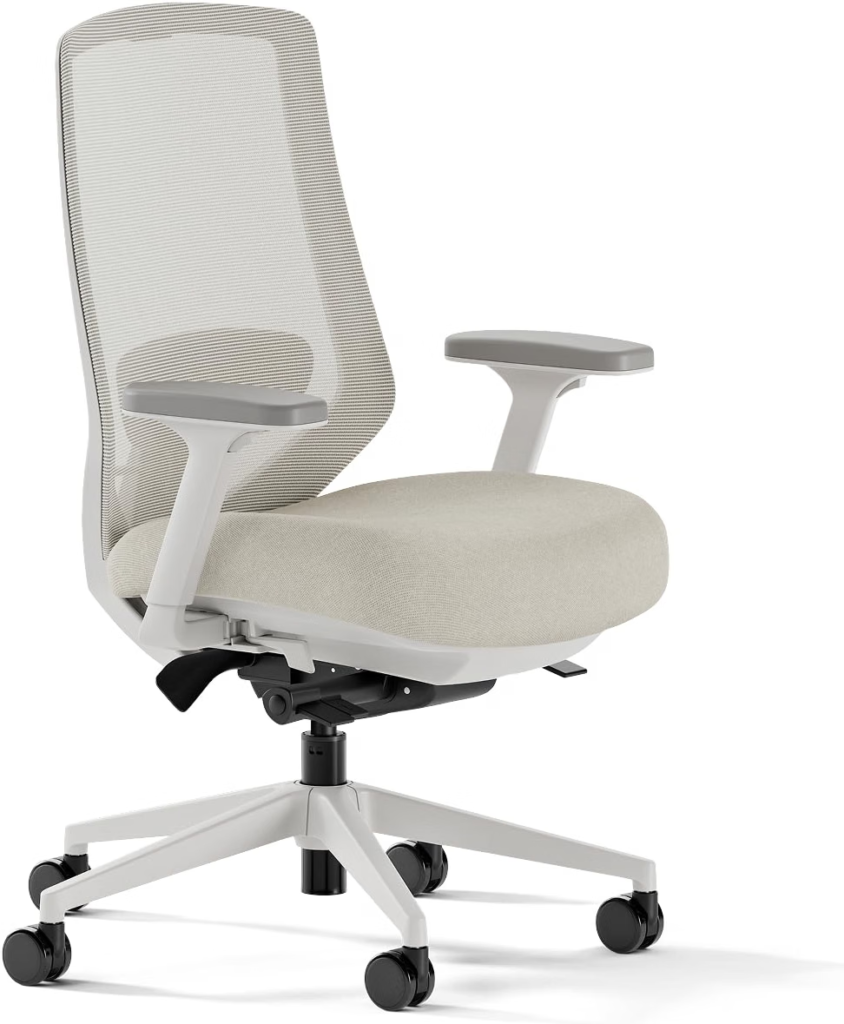
If I had to pick one chair to recommend to most writers, it would be the Branch Ergonomic Chair Pro. It sits right around the $500 mark, which is a lot of money, but it’s a fraction of what the big-name premium chairs cost.
What makes it stand out is how adjustable it is. Branch advertises 14 points of adjustment, including 5D armrests (height, width, depth, pivot, and pad width), lumbar support that adjusts in both height and depth, seat depth, tilt tension, and forward seat tilt. That forward tilt is honestly underrated for writers. When you’re leaning into the keyboard during an intense scene, the seat can tilt with you instead of fighting you.
It also comes in a bunch of materials, like mesh, vegan leather, and even boucle, so you can pick something that matches your writing space. There’s an optional headrest too, which is nice if you like to lean back while reading over your draft.
Who it’s for: writers who want near-premium adjustability without spending over $1,000.
2. SIHOO B100 Pro
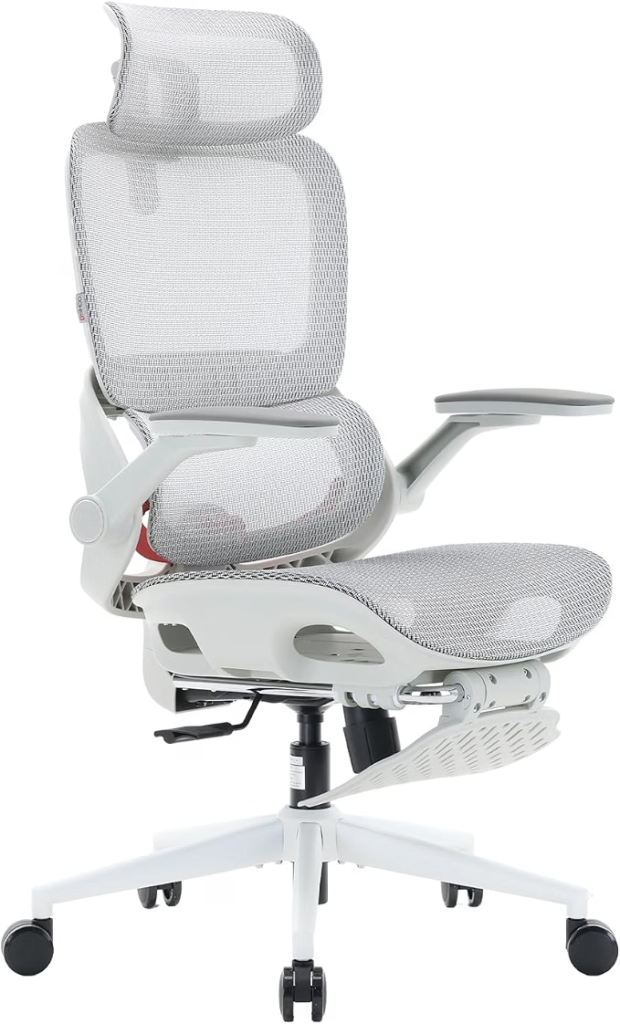
The SIHOO B100 Pro is the chair I’d point most writers on a tighter budget toward. It’s been sitting at around $299.99, and for that price, you get features that used to only show up on much more expensive chairs. It also goes frequently on sale, so you might be able to grab it at something like $219.99 instead.
The big selling point here is the dynamic lumbar support, which moves with your back as you shift around instead of just sitting in one fixed spot. It has a pressure-relieving frame, an adaptive spring plate, and the arm rests include 360-degree rotation. It’s got the famous dual-back design you see in a lot of ergonomic chairs as well and even includes a retractable footrest.
Who it’s for: writers who want a real ergonomic chair for around or under $300.
3. GABRYLLY Ergonomic Office Chair
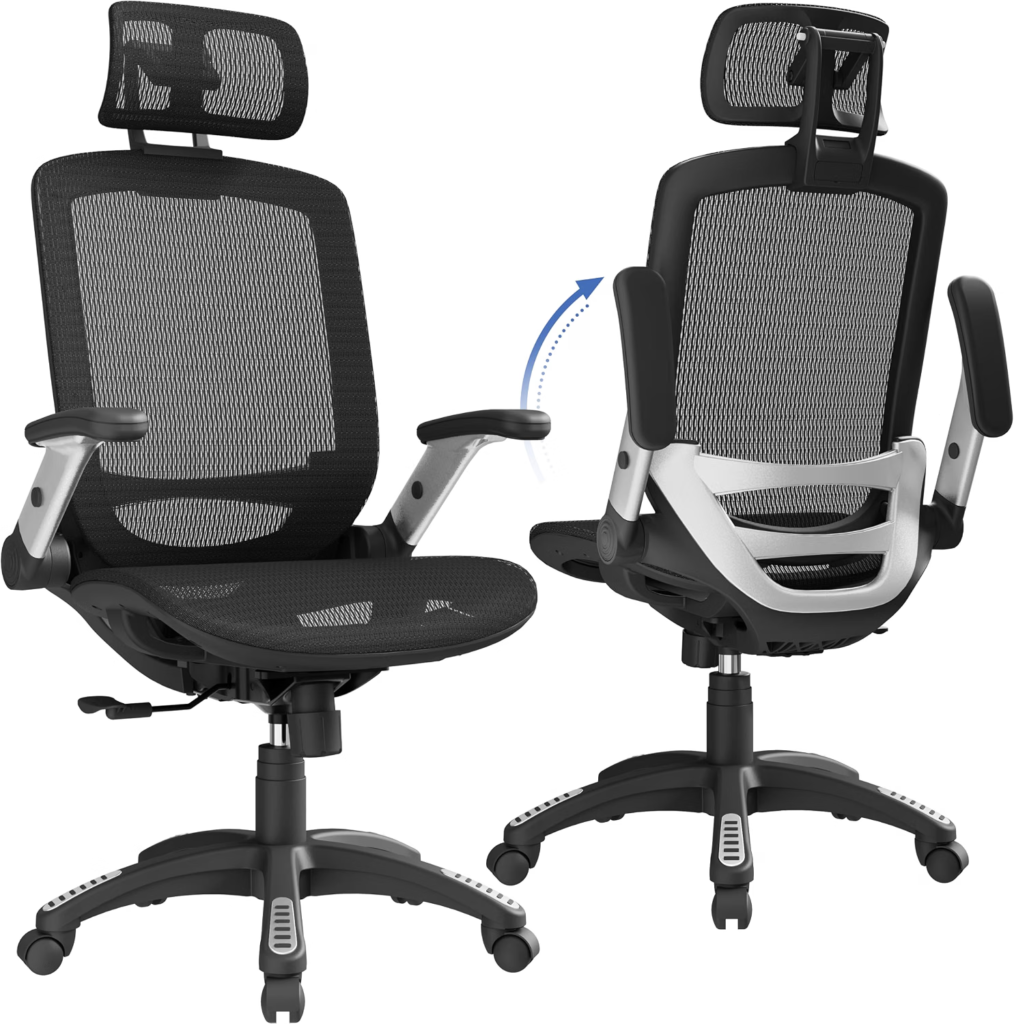
If your budget is tight and you’re currently writing in a dining chair (no judgment, we’ve all been there), the GABRYLLY Ergonomic Office Chair is a solid step up. It’s the most affordable pick on this list and one of the most popular ergonomic chairs on Amazon overall.
It has a high mesh back with a built-in headrest, flip-up armrests that you can tuck out of the way, a wide cushioned seat, and a tilt that locks between 90 and 120 degrees. The flip-up arms are actually really handy for writers who like to sit cross-legged or shift around a lot.
Who it’s for: newer writers, students, or anyone who needs a decent chair now and plans to upgrade later.
What to know: you won’t get the fine-tuned adjustments of the more expensive chairs here, like detailed seat depth or multi-direction armrests. Some listings say it fits people between roughly 5’2″ and 6’1″, so if you’re outside of that range, look at another option.
4. Secretlab Titan Evo (Best for Writers Who Are Also Gamers)
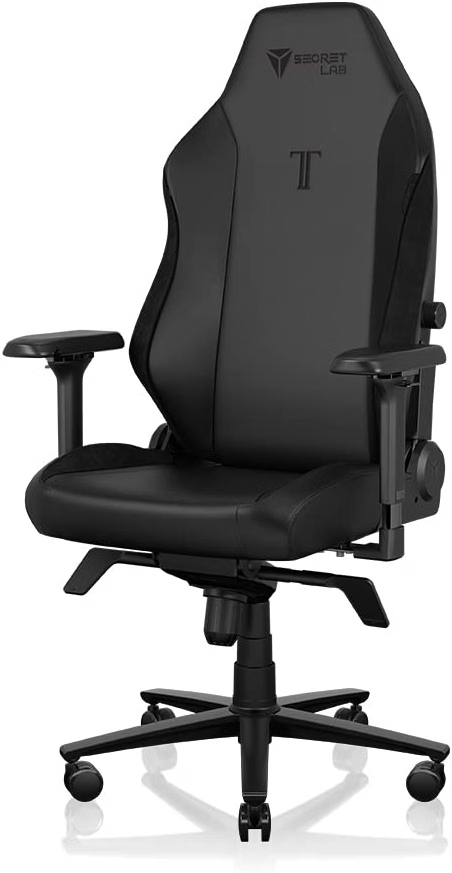
A lot of writers are also gamers, and honestly, it makes sense. We love stories, we love worlds, and a good RPG can be just as inspiring as a good book. The problem is that most writers end up with one chair that’s great for gaming and terrible for typing, or a boring office chair that feels awful when you lean back with a controller. The Secretlab Titan Evo is the chair I’d point you to if you want one seat that handles both.
Most gaming chairs have a bad reputation with ergonomics people, and a lot of that is deserved. The cheap ones rely on a strap-on lumbar pillow that slides around and never sits where you need it. The Titan Evo is different because the lumbar support is built right into the backrest and adjusts in four directions (up, down, in, and out), so you can dial it into the curve of your lower back for long typing sessions. It also has 4D armrests that you can bring in close to your keyboard, which is exactly what you want while drafting.
It also comes in three sizes (Small, Regular, and XL), which is a big deal. A lot of gaming chairs only come in one size and just don’t fit shorter or bigger people properly. The XL is rated for up to 395 lb. There are also tons of colors, fabrics, and even licensed designs, so if you want your writing space to have a bit of personality, this is the most fun-looking chair on the list.
Price-wise, it usually lands somewhere in the $550 to $670 range depending on the size and material, and it comes with a 5-year warranty.
Who it’s for: writers who also game and want one chair that fits both styles without sacrificing real ergonomic support.
What to know: it doesn’t have seat depth adjustment like the Branch or the HON, and the bucket-style seat has side bolsters, so writers who like to sit cross-legged might find it a little snug. The leatherette version also runs warmer than mesh, so if you write in a hot room, go for the SoftWeave fabric version instead.
5. HON Ignition 2.0 (Best for Writers Who Need Seat Depth Adjustment)
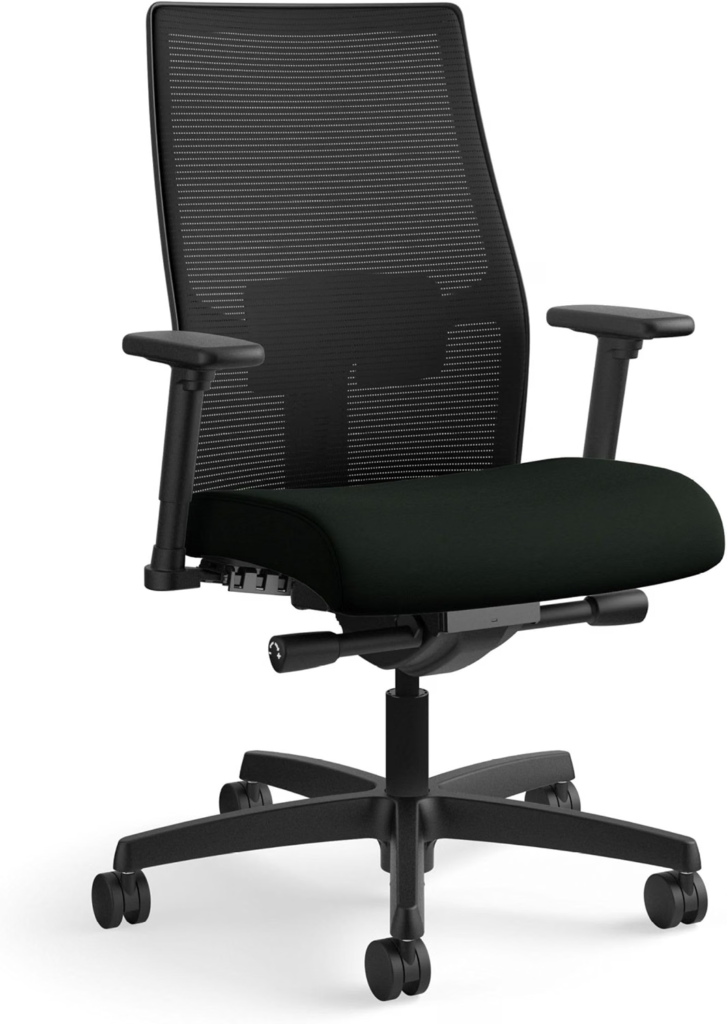
The HON Ignition 2.0 is one of those chairs that doesn’t get a lot of hype but quietly does everything well. On Amazon, it usually falls somewhere around the $400 to $480 range depending on the configuration.
It has a mesh back, adjustable lumbar support, a seat slider for adjusting seat depth, a synchro-tilt recline, and height and width adjustable arms. That combination of seat depth plus adjustable lumbar is something a lot of chairs at this price skip, which is why I like it for writers who have struggled to find a chair that fits their legs properly.
There’s also a Big and Tall version with a higher weight capacity (listed at 450 lb), which is great if the standard chairs on this list don’t work for your body.
Who it’s for: writers who want reliable, no-frills ergonomics from an established office furniture brand.
What to know: it’s not the most stylish chair, and the armrests are more basic than the Branch or the SIHOO Pro V2.
6. Steelcase Series 1
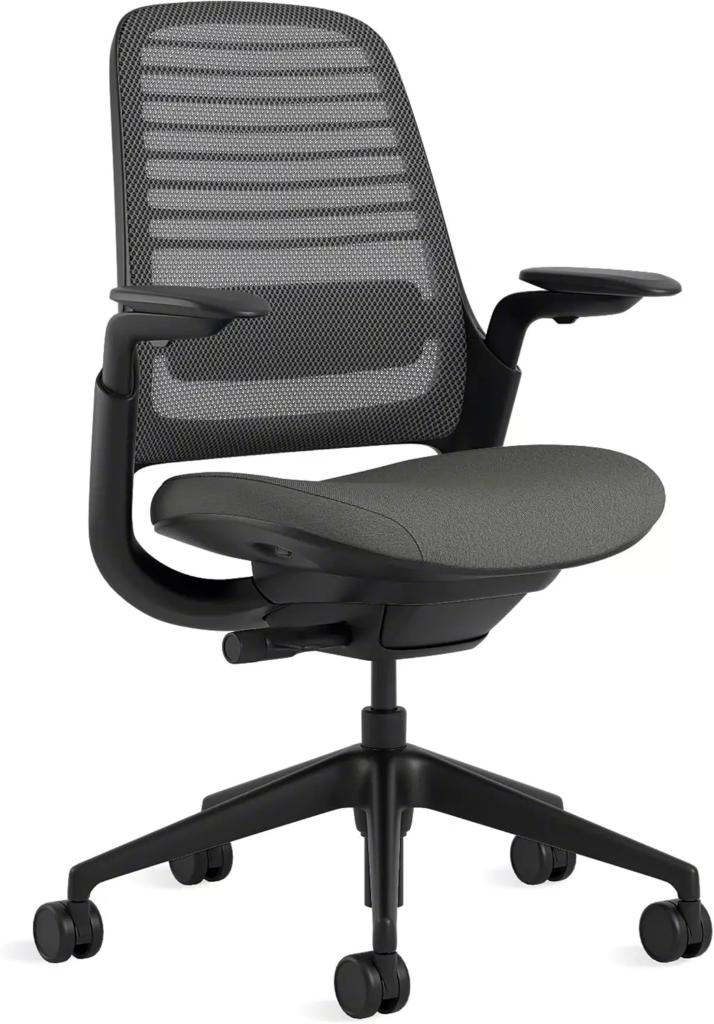
Steelcase is one of the most respected names in office chairs, and the Series 1 is their entry point at around $500. You’re paying a bit more for the brand, but you’re also getting their build quality and their warranty.
The backrest uses Steelcase’s LiveBack system, which flexes to follow your spine as you move. The controls are also weight-activated, so the recline tension adjusts itself to your body instead of you having to fiddle with knobs. It has 4-way adjustable arms and an optional headrest.
The reason I flag it for shorter writers is the seat height. It can go as low as 15.5 inches, which is lower than a lot of chairs. If your feet have been dangling off the ground for your entire writing career, this one is worth a look.
Who it’s for: writers who want a big-brand chair that will last, and anyone who has trouble getting a chair low enough.
What to know: it doesn’t go as high as some other chairs, so very tall writers should look elsewhere.
7. Steelcase Leap V2 (The Splurge Pick)
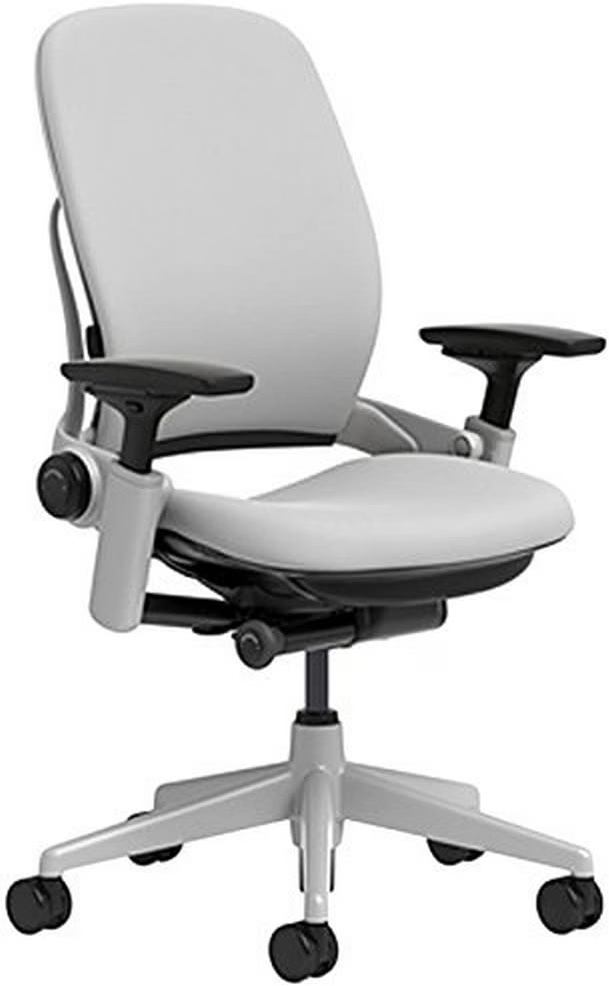
If you’re a full-time writer, or you’re planning to be, and you want the chair you’ll still be sitting in when you finish book ten, the Steelcase Leap V2 is the one people keep coming back to. It has been around since 2006 and it’s still the benchmark that a lot of reviewers compare other chairs against.
It’s expensive. A new, well-configured Leap can land around $1,400. What you’re getting for that is top-tier 4D armrests, adjustable seat depth, the LiveBack backrest, and a 12-year warranty. Leap chairs are also known for lasting a very long time, and refurbished ones from 15+ years ago are still out there being sold.
Who it’s for: career writers who sit for eight or more hours a day and want to buy once.
What to know: if the price makes you wince, look into renewed or remanufactured Leap V2 chairs, which often sell for around half the price of new.
Grab a new one over on Amazon!
Grab this discounted remanufactured one over on Amazon!
8. Varier Variable Balans Kneeling Chair (Best Alternative Pick)
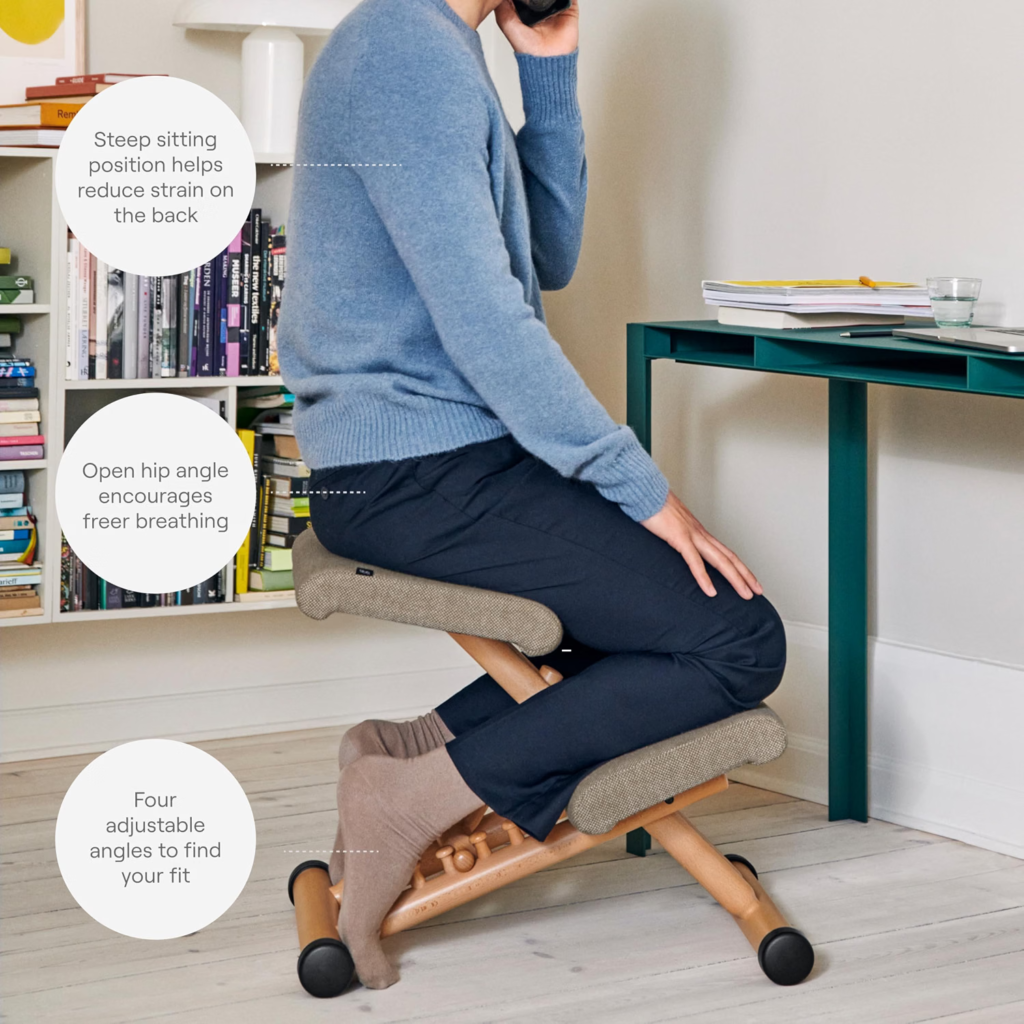
This one is a bit different. The Varier Variable Balans is the original kneeling chair, designed by Peter Opsvik back in 1979 and made in Norway. Instead of sitting back into a chair, you sit tilted forward with your shins resting on a pad, and the curved wooden base lets you gently rock as you work.
I wouldn’t recommend this as your only chair for all-day writing. However, a lot of writers like having one as a second seat to switch into for an hour or two, since changing positions throughout the day is one of the easiest ways to stay comfortable. It has no levers or knobs at all, which some people love.
Who it’s for: writers who want to switch up their sitting position during long sessions, or who love the look of a classic design piece in their writing space.
What to know: there’s no back support, and it takes some getting used to.
Grab this on Amazon right now!
Bonus: A Good Footrest
If you’re shorter, or your desk is on the high side, a footrest is the cheapest upgrade you can make to any chair on this list. The ComfiLife Foot Rest is a memory foam footrest with adjustable height, and it’s an easy add-on that makes a surprisingly big difference when your feet don’t quite sit flat on the floor. You can purchase this on Amazon as well.
How to Set Up Your Chair Once It Arrives
A great chair set up badly is still going to leave you sore. When your chair arrives, take ten minutes and actually go through the adjustments instead of just sitting down and writing.
Start with the seat height. Your feet should sit flat on the floor (or on a footrest) with your knees roughly level with your hips. Then adjust the seat depth so there’s a little gap between the front edge of the seat and the backs of your knees.
After that, move the lumbar support until it sits in the curve of your lower back. Then bring the armrests up and in until your elbows rest at about the same height as your keyboard, with your shoulders relaxed instead of shrugged.
Lastly, play with the recline tension. You want the chair to move with you when you lean back to think, but not to dump you backward every time you shift.
And remember, even the best chair isn’t meant to be sat in for six hours straight without moving. Get up between chapters. Refill your water. Walk around while you think through a plot problem. Your body (and honestly, your story) will thank you.
Speaking of long sessions, a lot of my own writing time goes into figuring out who my characters actually are before I ever write a scene with them. If you’ve ever been stuck in your chair for an hour trying to figure out what a character would do next, that’s exactly why I created my Ultimate Character Creation Guide and Workbook. It’s a 150+ page workbook designed to help you go from concept to a “living” character, and it’s one of my best-selling guides! Check it out today → [The Ultimate Character Creation Guide].
How to Choose the Best Ergonomic Chair for Writing
If you’re still not sure which chair to go with, here’s a quick step-by-step breakdown to help you narrow it down.
- Figure out how long you actually sit. If it’s a couple of hours a day, a budget chair like is plenty. If it’s six or more, invest in something more adjustable.
- Measure yourself and your desk. Your height, your leg length, and your desk height decide which chairs will actually fit you.
- Prioritize seat depth and lumbar support. These two adjustments matter the most for long writing sessions.
- Check the armrests. Make sure they can move close enough to your keyboard to support your arms while typing.
- Pick your material. Go with mesh if you run warm and foam or upholstery if you want something cozier.
- Read the warranty and weight capacity. A chair you use daily should be built to last.
- Set it up properly when it arrives. Spend ten minutes on adjustments before your first writing session.
Conclusion
Finding the best ergonomic chair for writers who sit all day really comes down to how you write, how long you write, and what your body needs. You also need to consider what you will be using your chair for. I personally opted to get an ergonomic gaming chair from Cybeart, which is basically the same as Secretlab, but I personally liked some of the branded designs at Cybeart more and they’re a Canadian-based company if you’d like to support some Canadian owned businesses!
A comfortable chair keeps you writing longer, so make sure those hours count. Don’t forget to grab a copy of my ten-question world building primer. It’s totally free!
And if you’re writing anything that needs a fully built world, pick up my Ultimate Guide to World Building. It’s got over 340 pages full of intensive instruction, guided worksheets, and plenty of proven tips for building worlds that feel lived-in → [The Ultimate Guide to World Building].
FAQs
For most writers, the Branch Ergonomic Chair Pro is the best overall pick because it offers 14 points of adjustment, forward seat tilt, and adjustable lumbar support at around $500. Writers on a budget should look at the SIHOO B100 Pro, while full-time writers who want a chair that lasts for years may want to invest in the Steelcase Leap V2.
It depends on how many hours you sit each day. For a couple of hours, a chair under $300 is usually enough. If you write six or more hours a day, spending $400 to $600 gets you much better adjustability, and full-time writers often find a premium chair worth it over the long run.
Both can work well. Mesh backs breathe better and keep you cooler during long sessions, while foam and upholstered seats tend to feel softer and cozier. Many of the best chairs combine a mesh back with a foam seat.
Kneeling chairs like the Varier Variable Balans can be a great second seat for switching positions during the day. However, they don’t have back support, so most writers shouldn’t use one as their only chair for all-day writing.
Seat depth and lumbar support matter the most because they decide whether your back and legs are actually supported over long sessions. Adjustable armrests are a close third, since writers spend so much time typing.
Gaming chairs are designed more for leaning back than for typing at a desk, and many have fixed lumbar pillows and bucket seats that don’t adjust well. A dedicated ergonomic office chair is usually a better fit for writers. If you do want a gaming chair that does work for ergonomics, then either grab the Secretlab Titan Evo or the Cybeart Apex Pro.
Renewed and remanufactured chairs from brands like Steelcase and Herman Miller can be a great way to get a premium chair for much less. Just check the seller’s ratings, what condition the chair is listed in, and what kind of warranty comes with it.
Even with a great chair, it’s a good idea to get up and move regularly. Many writers find that standing up between chapters or scenes is an easy habit to build. If you have specific health concerns, check with a doctor about what’s right for you.
This post contains affiliate links, which means I earn a small commission at no additional cost to you when you purchase something through one of my links. Thank you for your support!