
The 7 Types of Governments Found in Fantasy Worlds
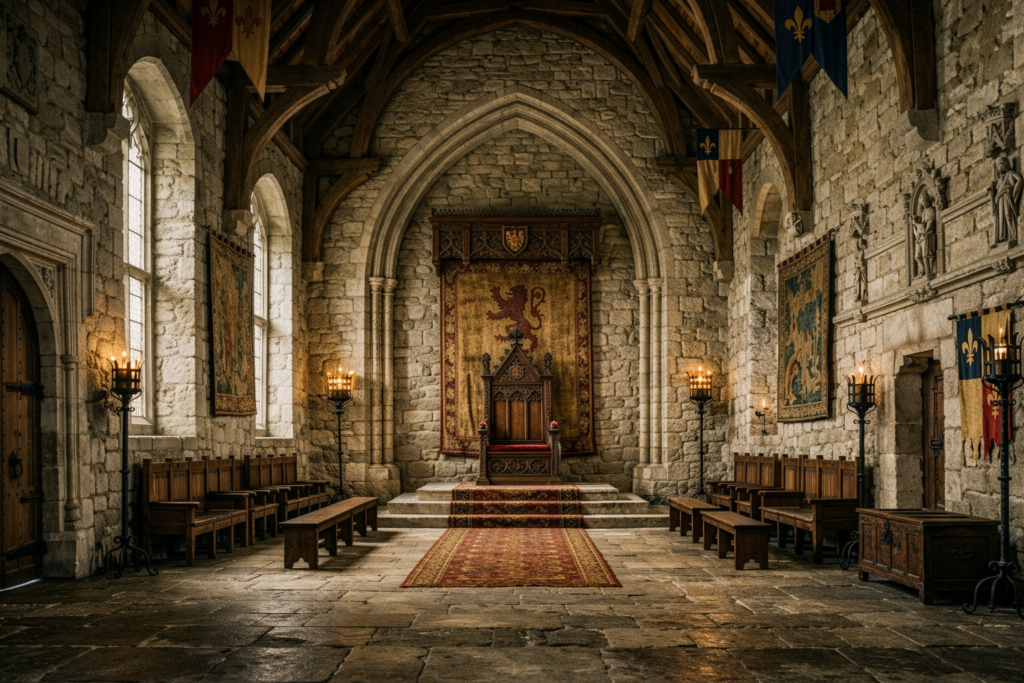
Table of Contents
Fantasy stories rarely exist in a bubble. Behind every kingdom, rebellion, or magical academy, there’s a political system that shapes how the entire world functions. Governments determine who holds power, who enforces laws, how wars start, and how ordinary people go about their daily lives. When writers skip over political structure, the world inevitably ends up feeling shallow or inconsistent. A lot of fantasy worlds borrow inspiration from real history, blending medieval monarchies, ancient republics, and rule by divine or magical forces. Understanding the most common systems can help you design a government that actually fits your story rather than forcing your plot to bend around vague world building decisions. For today’s post, I’ll be covering the 7 types of governments often found in fantasy worlds and I’ll help point out some great resources to help you learn how to create your own fantasy government as well.
I’ve been writing fantasy and sci-fi for a long time (check out my series, The Fallen Age Saga), and government structure is something that comes up constantly in my world building process. It’s actually one of the foundational things I cover in my Ultimate Guide to World Building, which is 340+ pages of intensive instruction, guided worksheets, and practical tips for building out any fantasy world.
Your World Building Journey Begins Here…
Get 10 powerful prompts that will spark a living, breathing world and set the stage for the epic details to come.
A Messenger Has Arrived…
They carry your 10-Question World Primer, sealed with my crest. Break the seal (open your inbox) to begin shaping your realm.
Why Governments Matter in Fantasy World Building
Government is one of those world building elements that a lot of writers overlook early on, but it’s actually one of the most important things you can establish before you start writing. The government of your fantasy world is what sets the precedent for basically everything else. It determines who has power, who doesn’t, what laws exist, how those laws are enforced, and what happens to people who break them or challenge the system.
Government also shapes the daily lives of ordinary people in your world, not just the rulers and the heroes. What a farmer can own, who a merchant can trade with, whether a woman can inherit property, whether a magic user is celebrated or persecuted, all of these things are determined by the political system your world operates under.
You can work through the logic of your own fantasy government with my new political system builder workbook. It’s got tons of questions and strategies to help you create a whole government from the ground up and slot it in nicely with the rest of your world’s logic. Grab your copy here today!
7 Types of Governments Often Found in Fantasy Worlds
1. Absolute Monarchy
The absolute monarchy is probably the most recognizable political system in fantasy. In this structure, a king or queen holds total authority over the realm. Their word is law, and there are few or no institutions capable of limiting their power.
A lot of fantasy stories use this system because it instantly establishes hierarchy and conflict. The ruler might be wise and beloved, or they might be corrupt, tyrannical, or dangerously incompetent. Either way, the fate of the kingdom rests on a single person, and that’s a really compelling place for a story to live. Also, a lot of fantasy stories tend to take heavy inspiration from medieval times, which were full of kingdoms. Check out this post to learn more about how to write medieval fantasy.
From a writing perspective, this structure works really well when your story revolves around royal courts, palace intrigue, and the burdens of leadership. Check out this other post here where I talk about how to write royal families in fantasy books.
2. Feudal Kingdom
Feudal systems are a bit more complex than pure monarchies. While a king or queen technically rules the land, power is distributed among powerful nobles who control different regions of the kingdom.
Each noble family governs its own territory, collects taxes, maintains armies, and pledges loyalty to the crown. In practice though, these nobles often have enormous autonomy and they know it.
For writers, feudal systems are ideal for stories involving shifting alliances, noble houses, and complex political maneuvering. They allow for multiple centers of power rather than everything flowing through one figure.
3. Mageocracy
In a mageocracy, political power belongs to those who wield magic. Magical ability becomes the primary qualification for leadership, often replacing traditional nobility or military strength.
These governments can take several forms. A council of archmages might govern the realm, or magical academies may control entire cities. In some worlds, powerful spellcasters become hereditary rulers whose magical bloodlines maintain their authority from generation to generation.
Mageocracies are especially effective in stories that explore magical ethics, forbidden knowledge, or the dangers of unchecked power. If magic is central to your world, your Magic System Builder Canva Template is a great tool to help you flesh out how your magic system interacts with the political systems you’re building. You can grab it from my shop!
4. Theocracy
Theocracy places religious authority at the center of government. Instead of kings or elected officials, religious leaders govern society according to sacred law.
In fantasy settings, this often means priests, prophets, or divine avatars hold political power. Their authority might come from holy texts, spiritual visions, or claimed direct communication with a deity.
This structure creates a really unique blend of faith and politics. Laws get justified as divine commands, leaving very little room for dissent. Heresy becomes not just a spiritual crime, but a political one too.
I’m going to be releasing a new guide and workbook soon that’ll cover creating fantasy religions and mythology, so be sure to sign up below to stay up to date with all of the new information about my website and books (plus, you’ll get a character backstory cheat sheet when you sign up below):
Craft unforgettable character backstories
Grab your free Character Backstory Cheat Sheet to learn more about your characters and organize your narrative
Thank you!
You have successfully joined our subscriber list.
5. Empire
Empires differ from kingdoms in scale and ambition. Instead of ruling a single nation, an empire governs many territories, cultures, and peoples under one central authority.
An emperor or empress typically sits at the top of the hierarchy, supported by governors, generals, and bureaucrats who manage distant provinces. These provinces may retain elements of their original culture while still being subject to imperial law.
Because empires encompass so many different populations, they often struggle with rebellion, cultural tension, and logistical challenges. Maintaining unity across vast territories becomes a constant, exhausting balancing act, and that’s a lot of story material.
6. Republic or Council State
Not all fantasy worlds rely on kings and emperors. Some stories feature republics or council-based governments where leaders are chosen by vote or selected from influential groups.
In these systems, power is shared among representatives rather than concentrated in a single ruler. A senate, council of elders, or elected assembly may debate laws and make decisions collectively.
This structure allows for political drama built around debate, negotiation, and factional rivalry. Different political groups may compete for influence, each representing different interests within the society.
7. Tribal Confederation
Tribal confederations show up frequently in fantasy worlds focused on nomadic cultures or decentralized societies. Instead of a single permanent ruler, multiple tribes or clans form alliances for mutual protection and cooperation.
Leadership within a confederation may rotate between chiefs, or a council of tribal leaders may make decisions together. Authority tends to be more fluid than in centralized states, which creates its own kind of tension.
This structure highlights cultural identity and communal bonds over rigid political hierarchy. It also creates interesting conflict when different tribes disagree about strategy, tradition, or alliances with outsiders.
Conclusion
Government structures influence far more than just politics. They shape economics, military organization, social classes, and even cultural values. When you design governments intentionally, plot conflicts start to emerge naturally. You don’t have to force conflict into your story if the world itself is already generating it.
If you want a structured way to work through all of this, my Ultimate Guide to World Building covers political systems, social structures, economies, and more in over 340 pages of guided worksheets and instruction. It’s one of my best-selling guides and it’s designed to take you from concept all the way to a fully realized world. Check it out here: The Ultimate Guide to World Building.
You can also get a more focused workbook in my Political System Builder! It’s focused on simply building and creating the elements of your government by working through the logic behind your system’s structures!
Your World Building Journey Begins Here…
Get 10 powerful prompts that will spark a living, breathing world and set the stage for the epic details to come.
A Messenger Has Arrived…
They carry your 10-Question World Primer, sealed with my crest. Break the seal (open your inbox) to begin shaping your realm.
FAQs
Monarchies are by far the most common because they mirror medieval European history, which inspires a huge portion of fantasy settings. Kings, queens, and royal courts provide clear power structures and tons of dramatic storytelling opportunities.
Not necessarily, but having at least a basic political structure makes a world feel more believable. Even a small village exists within some form of authority, whether that authority comes from a king, a council, or a religious order.
Absolutely. Some of the most immersive fantasy worlds contain several political systems interacting with each other. A republic might trade with a neighboring empire while tribal nations exist beyond their borders. That kind of variety makes the world feel bigger and more real.
Consistency and consequences. Laws should influence society, power struggles should have visible effects, and leadership decisions should shape the world around your characters. If nothing has consequences, the government doesn’t feel real.