
How to Write a Post-Apocalyptic World For a Book
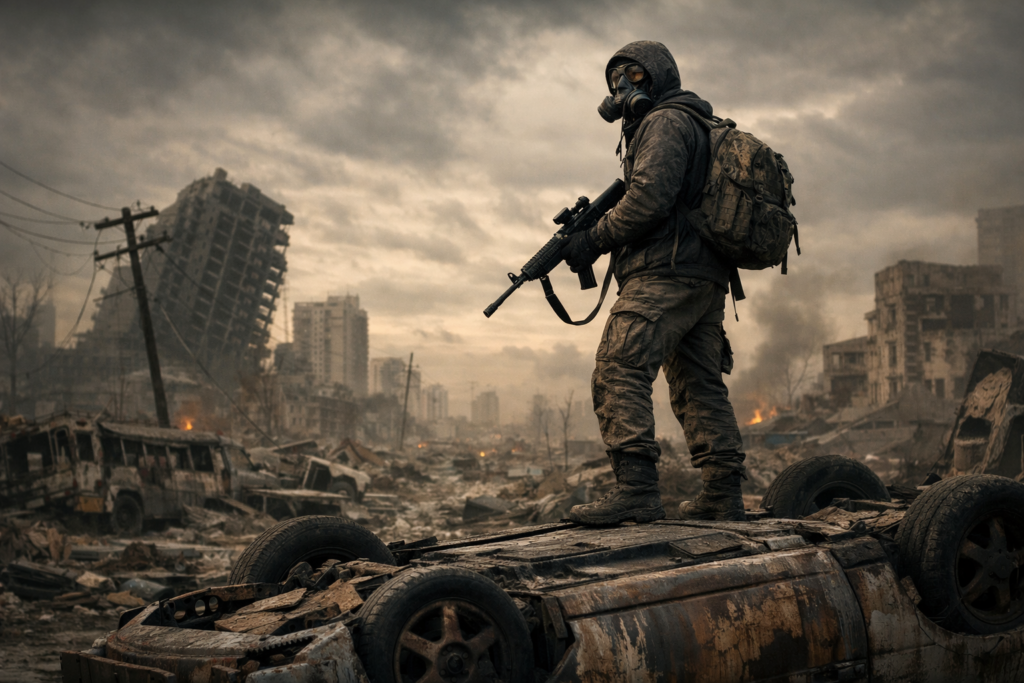
Table of Contents
Post-apocalyptic fiction is one of the most compelling subgenres in speculative fiction. However, many writers make the mistake of thinking that a post-apocalyptic world is defined by destruction and chaos alone. The ruined cities, empty highways, and broken systems are only the surface of what makes these stories work. What truly makes a post-apocalyptic setting compelling is how people adapt after the end, how societies fracture or reform, and how meaning is rebuilt when the old world no longer exists. So, for today’s post, I’ll be walking you through how to write a post-apocalyptic world for a book or story that you’re working on. This can also help you if you’re creating a world for a video game or TV show or any other sort of project that requires this sort of story.
I’ve been writing fantasy and sci-fi for a long time (check out my series, The Fallen Age Saga) and I find that one of the most challenging things to get started with for most writers is the idea of world building. World building is a complicated and intensive subject that involves lots of bits and pieces. It’s also something that I focus on frequently on my blog and in my guides. So, if you want to get started with world building, grab a free copy of my 10-question world building primer. It’s completely free and it’ll help you properly position yourself when it comes to critically thinking about how you want to start and expand your world.
Your World Building Journey Begins Here…
Get 10 powerful prompts that will spark a living, breathing world and set the stage for the epic details to come.
A Messenger Has Arrived…
They carry your 10-Question World Primer, sealed with my crest. Break the seal (open your inbox) to begin shaping your realm.
What Does “Post-Apocalyptic” Really Mean?
Before writing anything down, it’s important to understand that post-apocalyptic fiction is not just an aesthetic. It is a social, political, and economic framework inspired by the collapse of modern civilization. This framework creates limitations that shape every aspect of life in your story. To put it a bit simply, this means:
- Governments and institutions have failed or been replaced
- Resources are scarce and desperately fought over
- Knowledge and technology may be lost or fragmented
- Social hierarchies form based on survival, not previous status
Your world doesn’t need to mirror any specific apocalyptic scenario you’ve seen before. It’s the aftermath that matters the most but how it occurred also needs to make sense. There will be disparities in access to food and clean water, there will be consequences for the vulnerable, there is more likely than not going to be violence over resources.
Ask yourself how hard life is for the average person in your world. Ask how often people die from preventable causes, how much power they realistically have, and how afraid they are of those who hold power. That answer should influence your world building and story-telling decisions. A show like The Walking Dead explores this well, but there’s also The Last of Us and even Fallout. All of them explore what life is like after the fall.
Start With the Aftermath, Not the Apocalypse
One of the biggest mistakes new post-apocalyptic writers make is spending too much time on the collapse itself. Although the apocalypse event is extremely important to the genre, it’s not the only aspect of it that matters in the long-run. It also may or may not be the major thing that influences your story. Even in a case where the apocalypse is a big deal, there’s likely going to be a new social structure behind everything propping up why the present situation is what it is.
In post-apocalyptic fiction, the collapse does not exist in a vacuum. It interacts with survival, power structures, new belief systems, and human nature. Before deciding how the world ended, you should have a clear understanding of:
- How long has it been since the collapse
- What systems failed completely
- What systems partially survived
- What people miss the most
A world that ended yesterday feels very different from one that ended generations ago. Is the apocalypse ruled by the memory of what was lost, or has enough time passed that the old world feels like myth? Are survivors former scientists and teachers, or are they children of survivors who never knew electricity? Once this timeline is defined, your world naturally finds its shape.
Build a Believable Post-Apocalyptic Society
A strong post-apocalyptic world feels like it existed long before the story began and will continue long after it ends. To achieve this, you need to understand how daily life functions for people who are not at the center of the plot.
Think carefully about things like:
- Food production and how people deal with food (currency? commodity?)
- Social classes and who holds power now
- New religions, superstitions, and ways people explain the collapse
- Law, punishment, and who actually enforces order
Most people in post-apocalyptic settings are not warriors or wanderers. They are scavengers, farmers, traders, guards, and laborers who just want to survive another day. Their routines, fears, and options in life ground your world far more effectively than elaborate lore about the apocalypse.
If your protagonist walks through a settlement, that settlement should have a reason for existing. It might exist because of a clean water source, defensible walls, fertile land, a cache of old-world supplies, or a strategic location. Nothing should feel decorative or placed there purely for atmosphere.
This is where world building properly becomes very important. World building allows for you to take your idea from a concept and create a practical universe that your characters can live and survive in. It’s very important for speculative fiction and is one of the most important first-steps in writing post-apocalyptic stories. That’s where my best-selling Ultimate Guide to World Building can help you out. It’s over 340 pages and includes tons of practical tips, tricks, instructional guides, guided questions, and more to help you get started right away!
Choose a Focused Conflict
Post-apocalyptic fiction thrives on contained, personal conflict rather than immediate world-ending stakes. You can pick the latter, but you’ll be dipping more into epic science fiction with a post-apocalyptic flair to it.
Instead of threatening the entire wasteland from page one, consider conflicts that feel authentic to post-collapse societies, such as:
- A power struggle within a survivor community
- Conflicts over scarce resources like medicine or clean water
- Factions competing for territory or control of old-world technology
- Ideological clashes between those who want to rebuild and those who embrace the new chaos
These types of conflicts allow tension to escalate naturally and give characters time to react, adapt, and make mistakes.
Create Characters Shaped by Their World
Characters in post-apocalyptic fiction should think and behave like people raised in scarcity and danger. Someone born after the collapse does not casually waste resources. A community leader does not fully understand pre-collapse luxury the same way an older survivor does. A scavenger is shaped by constant vigilance and distrust. A healer is shaped by the desperation of those they cannot save. It mostly depends on the timeline of your story and when the collapse actually took place. For instance, in the Metro games, Artyom is young in the first game and the way he deals with the world around him is clearly that of someone who was raised to be cautious and afraid of what he sees out there.
Ask yourself:
- What does this character believe is normal?
- What do they fear losing the most?
- What rules have they internalized without question?
Even hopeful characters are defined by the harsh world around them. Their optimism only matters because the world constantly threatens to crush it.
Creating characters is an important part of the writing process. This is precisely why I created this Ultimate Character Creation Guide and Workbook. It’s a 150+ page workbook designed to help you go from concept to a “living” character for any story you may be writing. It’s packed full of writer-proven tips and is one of my best-selling guides! Check it out today → The Ultimate Character Creation Guide.
Make Resources the Foundation of Conflict
Post-apocalyptic conflict is rarely abstract. It revolves around tangible needs.
- Food
- Water
- Shelter
- Safety
- Medicine
- Information
Decide what is scarce and what is abundant. A world with plentiful water but no medicine creates different stories than one with food but no safe shelter. Every major decision characters make should be shaped by survival. If your character chooses to help a stranger, that choice should cost them something real. If they choose to take from someone weaker, that should have consequences too.
How to Write a Post-Apocalyptic World the Right Way
Writing post-apocalyptic fiction successfully is not about copying tropes or checking genre boxes. You need to respect your world’s internal logic and stick to something that makes sense for both you and the readers. So, here is a step-by-step breakdown on how to write post-apocalyptic worlds the right way.
Step 1: Define the Time Since Collapse
The first thing that you need to do is to define how long it has been since the world ended. Choose whether society is freshly broken or long adapted. Think about whether survivors remember the old world firsthand or only know it through stories.
A common timeline structure in post-apocalyptic fiction involves three phases: immediate aftermath (days to months), early adaptation (years to decades), and established new order (generations). Below is how each phase typically looks:
- Immediate Aftermath: Chaos, panic, desperate survival, old-world knowledge still fresh (think The Walking Dead)
- Early Adaptation: Communities forming, power struggles emerging, scavenging still viable (think Metro 2033)
- New Order: Settled societies, myths about the old world, scavenging depleted (think Nier Automata)
Step 2: Decide What Actually Ended
Not everything disappears in an apocalypse. Determine what is truly gone and what remains in fragmented form. Select technologies, knowledge, or institutions that still function imperfectly. For example, maybe there’s a generator that works only sometimes or a radio with limited range. There may also be knowledge that exists without the means to use it. These limits are more interesting than total absence.
Step 3: Establish New Power Structures
Decide who leads, who follows, and who resists. After collapse, people reorganize. Some groups form strict hierarchies. Others rely on cooperation. Some turn to belief systems, myths, or violence to maintain control. Scarcity creates rules. Rules create conflict. Your post-apocalyptic world should feel governed by necessity rather than ideology. The Walking Dead did a great job of showing this throughout the seasons with some characters becoming strict and structured while others ran roaming gangs. It’s a pretty interesting show that explores this well in my opinion.
Step 4: Determine Core Scarcity
Choose the resource that drives tension and movement. This is the thing that characters will fight, steal, trade, and die for. Maybe it’s clean water. Maybe it’s ammunition. Maybe it’s medicine or fertile land. Whatever it is, this scarcity should touch every major plot point. It could also easily be multiple things, but there should be a particular scarcity that matters the most. Going back to our Walking Dead example, that’s safety and shelter where there aren’t walkers everywhere.
Step 5: Shape Culture Around Survival
Let customs, language, and morality reflect the new reality. Your world needs to have evolved its own culture based on what matters now. Maybe wasting food is the greatest sin. Maybe sharing information freely is considered dangerous. Maybe age is revered because so few people live long enough to grow old.
Step 6: Let the Past Haunt the Present
History matters to your story’s present just as much as it shaped its past. Old world memories should influence hope, grief, and conflict. If there was a catastrophic event, that event will still have lasting scars on your world today. If there were factions that betrayed each other during the collapse, that betrayal would impact society today. History doesn’t just vanish in the background, so take note of this and be sure to focus hard on the world building of your story to make sense of this part.
For example, a character can do something like reference a city that used to exist or a promise the old government broke. Just a single sentence will give the reader the idea that there is depth in your story and world.
Step 7: Reveal the World Through Action
Show the setting through choices, danger, and consequence rather than explanation. You do not need to explain all of your world’s history directly on the page. You as the writer however do need to understand it well enough that characters behave as if it matters. When these steps align, the world feels lived in rather than just like a stage.
Use Ruins as Story Tools, Not Decoration
Ruins should mean something. This is a big part of post-apocalyptic fiction and I think it’s something that defines the aesthetic of the genre. However, there are some issues where these things are included just for the sake of including them for the vibes. They need to actually have a presence that matters.
An abandoned hospital represents lost safety and medical knowledge. A flooded city represents infrastructure that failed to protect people. A school overtaken by nature represents a future that never arrived. Every ruin should reflect what was lost and why it matters now. If your character walks through an old shopping mall, that mall should evoke something specific about what the world used to value and what has changed.
Common Post-Apocalyptic Mistakes to Avoid
- Treating the apocalypse event as the main story instead of the aftermath
- Making survival too easy (undermines tension) or too hopeless (undermines investment)
- Ignoring long-term adaptation and how societies actually form
- Relying on constant violence to create tension instead of building meaningful stakes
- Creating a world that feels like a video game level instead of a place where people actually live
The most powerful post-apocalyptic stories balance despair with resilience. Your characters can struggle, suffer, and face impossible choices while still finding moments of connection, hope, and meaning.
Conclusion
Writing a post-apocalyptic world for a book or a story the right way means slowing down and thinking structurally rather than just cosmetically. If you build the foundation of your story correctly, the survival elements will hold their weight against the speculative components. Be sure to also do some good research into actual disaster response, how communities form under pressure, and what people truly need to survive. Don’t just create wastelands for the sake of adding wastelands. You need to have an understanding of what post-collapse life would actually mean. It’s not all just raiders and ruins, though Arc Raiders is a pretty fun game…
Don’t forget to grab a copy of my ten-question world building primer. It’s totally free!
Your World Building Journey Begins Here…
Get 10 powerful prompts that will spark a living, breathing world and set the stage for the epic details to come.
A Messenger Has Arrived…
They carry your 10-Question World Primer, sealed with my crest. Break the seal (open your inbox) to begin shaping your realm.
Be sure to also pick up my Ultimate Guide to World Building to get started on your dream story today! It’s got over 340 pages full of intensive instruction, guided worksheets, and plenty of proven, proper tips for writing amazing books that need plenty of world building → The Ultimate Guide to World Building.
FAQs
A post-apocalyptic setting is defined by the collapse of modern civilization and how humanity adapts afterward. The key elements are scarce resources, failed institutions, new power structures, and characters shaped by survival. Ruins and wastelands are visual elements, but the defining factor is how survival, scarcity, and adaptation shape daily life.
No, but they must be logically consistent. You do not need to replicate realistic disaster scenarios perfectly, but the world should follow believable constraints around resource availability, human behavior, and social organization to maintain immersion.
As much as the story requires, but usually less than writers expect. The apocalypse is most effective as backstory that influences the present. Spending too much time on the collapse itself often weakens the actual story about survival and adaptation.
World building is essential, but it should support the story rather than overwhelm it. The goal is not to explain everything, but to ensure the world feels consistent and lived-in through character behavior and consequences.
Yes. Harsh realities, moral ambiguity, and danger are natural to post-collapse settings, but hope and human connection can exist alongside them. The most memorable post-apocalyptic stories find moments of light in the darkness.
Focusing on aesthetics instead of systems. A believable post-apocalyptic world relies on resource scarcity, new power structures, and the weight of what was lost rather than just surface-level tropes like abandoned buildings and wandering survivors.