
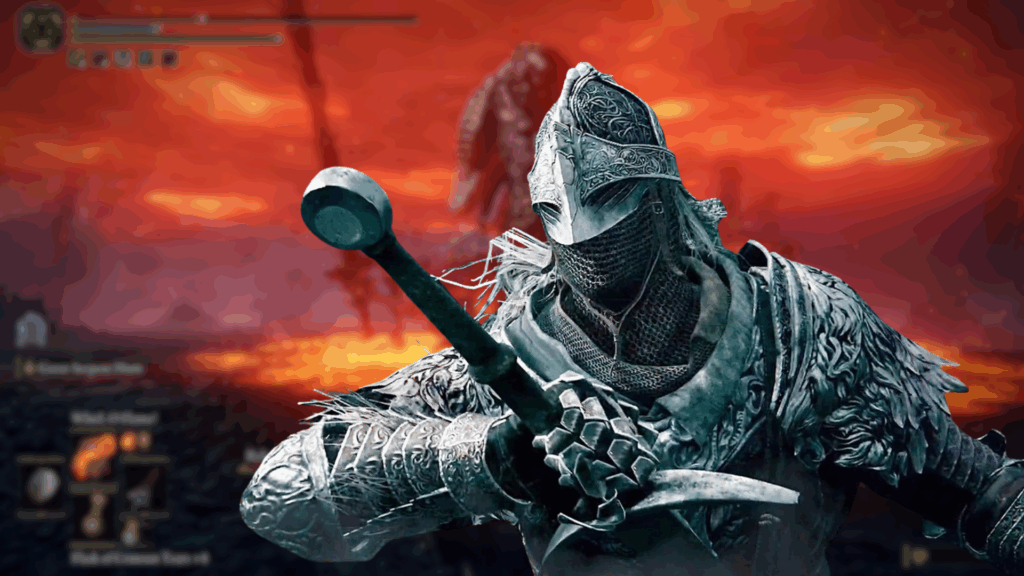
One of the best video games I’ve ever played has to be, without a doubt, Elden Ring. The award-winning action RPG by FromSoftware has become one of the most popular games of all time. It’s also a game that introduced so many people to the genre of the soulslike games (Dark Souls, Bloodborne, etc…). However, Elden Ring isn’t just amazing for its gameplay and its haunting world. It’s also amazing for the extensive amount of lore and storytelling packed into it. So, for today’s post, I’ll be talking about how you can write a story like Elden Ring without directly imitating it.
In my opinion, Elden Ring has some of the most extensive world building out of any fantasy game I’ve played in a long time. It’s also cleverly written because Elden Ring doesn’t give you a linear story. You reveal the fragmented narrative through exploration, cryptic dialogue with NPCs, and environmental details. However, we can take a lot of lessons as writers from Elden Ring to apply to our own writing. We are simply looking to be inspired by the style of storytelling in Elden Ring.
In general, many of the FromSoftware soulslike games follow a similar narrative style. Elden Ring was one of the first to be set in an open world. The thing with this structure is that as the player, you aren’t following one singular storyline. You can start quests at any time, enter a random room and trigger a boss fight, and follow along with the main story when you want to. But you have to discover how to trigger the main story in the first place. It’s just genuinely a great experience for gaming.
FYI, the person who wrote a good amount of the world building in Elden Ring was actually George R. R. Martin, the author of A Game of Thrones.
If you want to try your hand at creating immersive worlds like the one you see in Elden Ring, then check out The Ultimate Guide to World Building. It’s a 340+ page workbook that has real lessons, real workflows, and real systems that have helped tons of writers just like you!
Be sure to also sign up for my newsletter and get a copy of my 10 world building questions primer for free!
What is Elden Ring?
Elden Ring is an action RPG video game that was developed FromSoftware. It follows the tale of your customizable character, the Tarnished, as you travel through the Lands Between. The world has been rendered a decayed mess after the Shattering left the Elden Ring destroyed. The many children of Marika and other chaotic beasts and villains have claimed the shards, each seeking to become the Elden Lord. Your goal is to find the shards and become the Elden Lord. There are multiple ending possibilities depending on certain actions you take throughout the game, but technically, the canonical ending would be you becoming the Elden Lord.
Elden Ring is a personal favorite game of mine that I’ve sunk a ton of hours into. It’s got a ton of lore, storytelling, engaging world building, really cool setpieces, and one of the most engaging game worlds I’ve played before.
If you want to play Elden Ring for yourself, you can buy it at the retailers below:
For me, Elden Ring is an 11/10 game, so I 100% recommend every writer give it a go.
How to Write a Story Like Elden Ring
Step 1: Embrace Fragmented Storytelling
One of the most defining features of Elden Ring is how it delivers its story through fragments. You encounter cryptic dialogue, symbols, inscriptions, and environmental details. These pieces all reveal a bigger picture, but you actually have to find these pieces out first. This forces you as the player to actively participate and pay attention to the story so you can piece together the meaning.
As a writer, you won’t have access to the visual, interactive nature of a video game format, but you can still achieve a similar effect. Try to scatter clues throughout your story rather than just delivering the plot in a single, straightforward line. For instance, maybe a statue depicts victory that contradicts the oral legends of the same battle. Or maybe an ancient manuscript tells one version of history while a singing bard tells another version.
These sorts of gaps spark curiosity and keep your readers engaged, encouraging them to come up with theories. The ambiguity you create becomes a powerful tool for immersion and makes your readers feel more like active participants in the story rather than just neutral observers.
Step 2: Create a Rich, Layered World
The Lands Between feels ancient and lived-in because of the fact that its history is layered, complex, and full of contradictions. To replicate this sort of feeling in your own world, you need to create a world where myths, cultures, and empires overlap across time. Basically, imagine an empire that has risen and fallen, leaving behind ruins that later generations will misinterpret. You can also create something like a religion that interprets natural phenomena as divine punishment, even if the truth contradicts them.
You want to also populate your setting with factions that each hold their own version of history. These factions should compete, be at odds with each other, and have their own ideas that impact the world around them.
You also have a chance to sort of create unreliable narrators throughout your story, especially if you have different POVs from different factions and groups. These things should feel like a natural consequence of the decay that’s occurred in the world and not just dramatic effect.
You basically want to give your world scars that reveal a past that was once thriving. Think of how in Elden Ring you have this beautiful kingdom district but it feels very hollow, destroyed, and full of danger. There was evidence that something was here, but it’s clearly not the same anymore due to whatever events occurred in the past:

Something I recommend for this is to use my Ultimate Guide to World Building. It allows you to keep all your world building ideas in one area, organized, and makes it easy to logically keep things connected. Plus, you’ll be able to design your past and present through my guide’s sections!
Step 3: Use Symbolic Magic and Items
In Elden Ring, magic and magical items serve as more than just useful gameplay tools. Beyond the actual combat, these items are carriers of lore and hint at a broader world and mythos. Maybe that one sword you picked up belonged to an ancient beast and it still has some enchanted powers that make it useful.
As you design your fantasy world and story, you want to think about items not as mechanics, but as artifacts that can enrich your world’s narrative. A necklace for instance might be treasured because it has protection powers, but it’s narratively important because it was the last possession of a saint. Relics can easily embody cultural identity, create political conflict, or inspire legends.
If you want to create magical systems and items to go along with those systems, I actually have some great resources for you to use that make organizing these things super easy:
They’re super easy to use and get started with and can help you flesh things out if you’re stuck on creating some magical items.
Step 4: Populate the World with Strange Beasts
The next thing you need to think about is the creatures and monsters that will exist in your world. Throughout Elden Ring, you are faced with some really bizarre creatures and monsters that embody the themes and struggles of the world. There are many scary looking things in Elden Ring that reflect the decay and remnants of divine punishment. It’s definitely evident just how much was lost in Elden Ring over time through the way the creatures look.
You can replicate a similar sense in your own story by creating beasts that represent things that went wrong in your world’s history. For instance, a plague-born beast might be a living embodiment of an empire’s hubris. Meanwhile, a dragon sleeping in a ruined castle could be a reminder of the downfall of a dynasty.
Monsters also alter the land around them. They can shape cultures, inspire religions, be used as mounts and for resources, or they can spread blight and ravage areas. They can become integral parts of your world if you play it right with what their existence really means.
I recommend using my Monster Creator Builder Worksheet to help you with this part! It comes with tons of questions that help anchor your monster/creature in your world. It’s also customizable and you can duplicate it as many times as you need for as many creatures as you need.
Step 5: Build a Haunted Atmosphere
The atmosphere of Elden Ring is haunted and melancholy. It embodies the weight of the loss and decay of the world and the creatures that live in it. Think of the set pieces that you have in Elden Ring from the Altus Plateau to Caelid and beyond. Each area has its own history, its own haunting story, and its own strange happenings. I’ve included some images of my own gameplay to show you what I mean by how Elden Ring’s world looks. This can help you get a sort of feel for the vibe you want to think about creating in your own story.


You can capture a similar thing in your own story by thinking about how to make the world and atmosphere itself haunted and mournful. Maybe you have ruins that are littered with statues of ancient deities whose worshippers no longer exist. Maybe there are creatures that live beneath a forest because they want to be closer to their ancestors for safety.
Your world should feel haunted/decayed not just by ghosts or spirits, but by memory, tragedy, and a strange silence. The world should feel full yet empty all the same. It’s this sort of haunting oddity that makes Elden Ring’s world succeed so much.
You can capture a similar eerie feeling in regions of your world with my Haunted Region Builder Workbook. It’s great for building up an area and going through why things happened a certain way. Plus, it has encounter tables so that you can come up with prompting ideas for things that can happen to your characters upon entering/interacting with this region.
Step 6: Let Readers Discover the Story
Discovery is sort of one of the main elements of Elden Ring’s storytelling style. Instead of just presenting exposition and stringing the player along with a narrative line, the game rewards curiosity and the willingness to try random things in the hopes of discovering a new underground city. Observe this image below of a literal underground city that you don’t really just get told to find. You sort of stumble upon it:

As a writer, you can do something similar without literally sending your readers on a quest to find underground cities or anything like that. You can scatter narrative threads across your world such as having your main characters overhear snippets of conversations. You can have them stumble upon relics with forgotten prayers inscribed in them.
Side characters can also reveal fragments of a larger truth, but never everything all at once. This creates a strange mystery that you can build off of where your characters have to work to find the truth. This style of writing requires a lot of deliberate placing of clues though, so you need to make sure things are organized.
Step 7: Present Themes of Tragedy and Ambition
Something that you’ll come to find while playing Elden Ring is that its themes revolve around ambition and tragedy. Everyone in this world is striving for something and most want to reach the top and become the Elden Lord. However, their ascent to this position often leads to corruption, ruin, and eventual defeat.
Capturing this sort of thematic line in your own story requires you to think about things like cycles of rise and fall in your own story. A kingdom may thrive under a wise ruler for a while but could crumble due to his greed. Take ordinary heroes that we would relate to and good people and twist them as they become more and more ambitious.
Your main characters themselves could easily embody this exact thing! In fact, that might be a really cool way to create a sort of grimdark story that embodies the sort of vibes of Elden Ring. If you want to create really interesting characters, I recommend grabbing a copy of my Ultimate Character Creation Guide, which includes over 150 pages and helps you build your main characters easily!
Conclusion
Writing a story as impactful and layered and rich as Elden Ring means you have to embrace mystery, layer your world, and hide answers from your readers until the time is right. You want to not only write a story, but also somehow create an experience out of your story.
You can play Elden Ring for yourself as well to get a full experience that could help spark your next fantasy world. Grab a copy at one of these retailers below:
Here’s a list of all the writing resources and tools I mentioned in this video as well:
- The Ultimate Guide to World Building
- Magic Item Creation Workbook
- Magic System Builder Worksheet
- Monster Creator Builder Worksheet
- Haunted Region Builder Workbook
- Ultimate Character Creation Guide
You shouldn’t just copy Elden Ring though. What you want is to learn from its narrative techniques and create a story that feels vast, mysterious, and unforgettable.
Sign up for my newsletter today and get access to a free marketing checklist! You’ll also get emails from me with writing and world building insights, product launch updates, exclusive discount codes, and so much more:
FAQs
Unlike most fantasy stories that use linear exposition, Elden Ring tells its story through fragments. Lore is hidden in item descriptions, ruins, and NPC dialogue, forcing players to piece it together themselves. This creates mystery and immersion rather than straightforward answers.
Not necessarily. Fragmented storytelling is just one approach. If you want to emulate Elden Ring, consider weaving mystery into your world by leaving gaps, contradictions, or half-truths.
Layer your world with history, myth, and conflicting perspectives. Think of civilizations rising and falling, religions interpreting events differently, and relics from forgotten eras littering the land.
Yes. In Elden Ring, monsters aren’t random and they embody themes of decay, ambition, or divine punishment. Give your creatures symbolic meaning or tragic origins.
Tragedy is a core element, but it doesn’t have to dominate everything. You can highlight cycles of ambition and downfall. This weight adds more depth and mirrors the dark mythic tone of FromSoftware’s storytelling.
Yes. Many readers love the feeling of piecing things together and debating interpretations. The key is to provide enough breadcrumbs for discovery, even if the “truth” is never fully confirmed. This style of writing turns reading into exploration. However, don’t make it confusing and difficult for the reader to understand.
The Ultimate Guide to World Building is a great resource for this!
Affiliate disclaimer: some of the links in this post are affiliate links, meaning that I earn a small commission at no additional cost to you when you purchase something through one of my links. Thank you for your support!